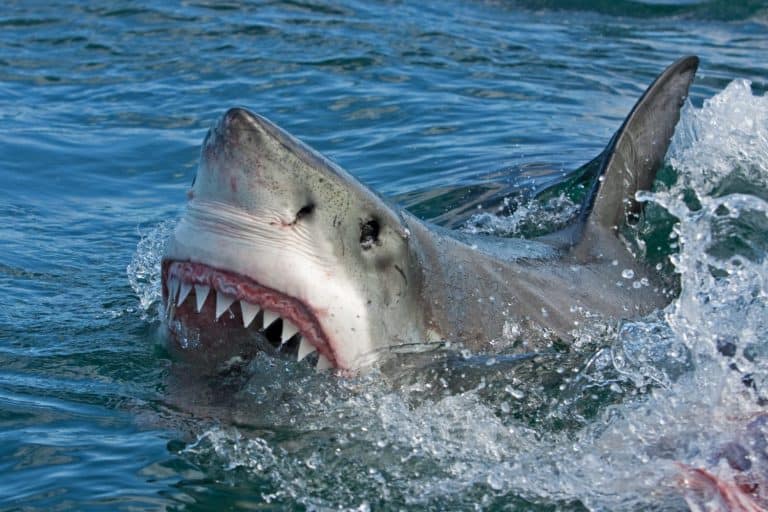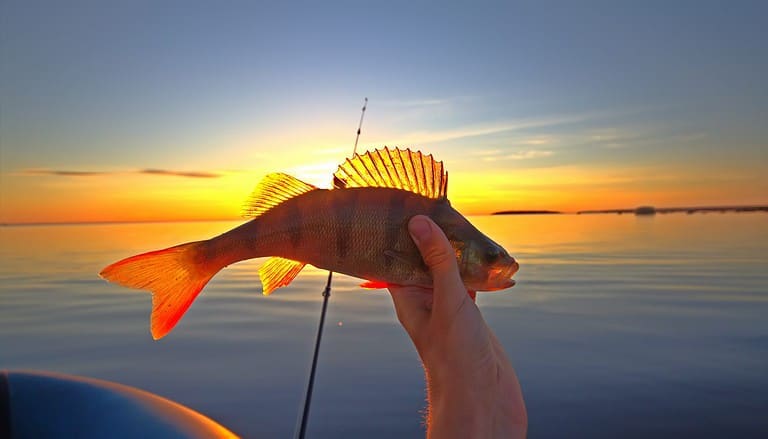

Some fish species, such as sharks, rays, and skates, can detect electrical signals, but it is much rarer for a species to be able to produce electricity. Of more than 30,000 fish species, there are only around 350 types of electric fish. A fish that is able to generate electricity is called electrogenic. Electrogenic fish have an electric organ made of electrocytes, which are modified nerve or muscle cells that evolved to produce electric fields. The organ’s output is referred to as the electric organ discharge (EOD).
Electric fish are generally divided into two types: strongly electric fish and weakly electric fish. Strongly electric fish have an EOD that is strong enough to stun both prey and potential predators. Their discharge pulses typically range from 10-150 volts, although some fish and eels are significantly stronger. The discharge pulse of weakly electric fish is usually less than one volt, and is used primarily for navigation, communication, and object location. Keep reading to learn more about the different types of electric fish.
10. Ghost Knifefish (Apteronotus)
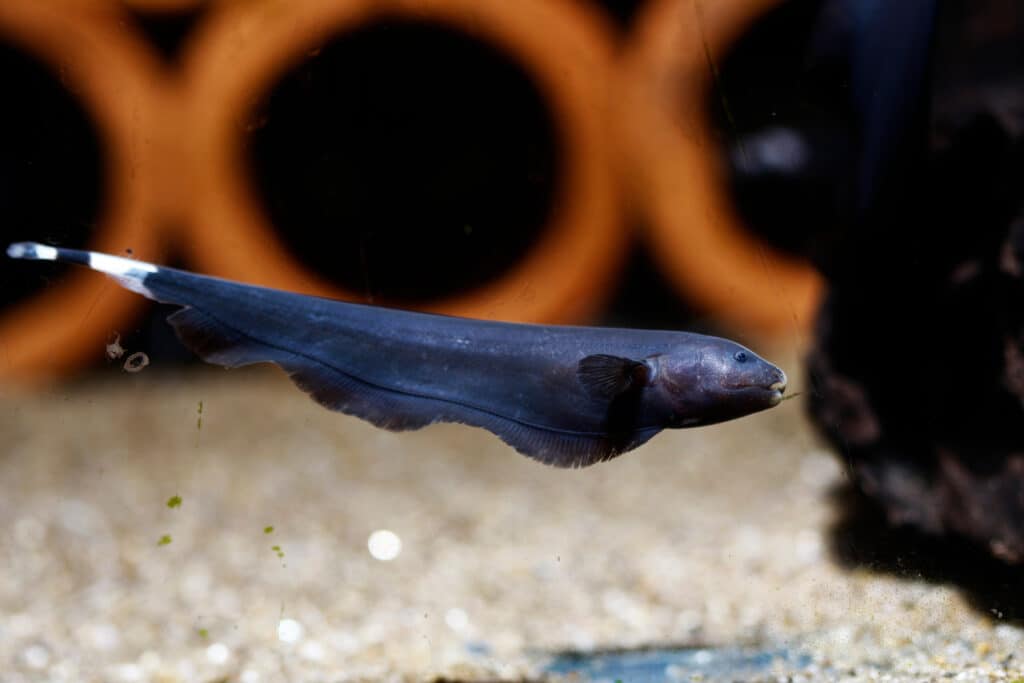
Black ghost knifefish are popular aquarium fish due to their peaceful natures.
©Pavaphon Supanantananont/Shutterstock.com
Ghost knifefish are weakly electric fish in the genus Apteronotus. They belong to the family Apteronotidae, which is characterized by long, slender bodies and long anal fins. There are currently 96 recognized species in this family. These fish typically reach between 7-20 inches long, depending on the species. They are also excellent swimmers, using their ribbon-like anal fins to undulate forward, backward, vertically, and to hover in place.
Ghost knifefish are found in subtropical and tropical freshwater rivers in South America. They prefer turbulent, fast-moving waters in complex habitats, such as those found in the Amazon River. These knifefish are nocturnal and use their weak electrical charge primarily for navigation and communication.
9. Glass Knifefish (Eigenmannia)

The glass knifefish can shift the frequency of its EOD to avoid interference from other electric fish.
Glass knifefish belong to the family Sternopygidae. These knifefish are also weakly electric fish, belonging to the genus Eigenmannia, which includes 30 species. These fish are native to the tropical and subtropical regions of South America. They prefer slow-moving tributaries of large rivers and can often be found among vegetation. Glass knifefish have long, slender, partially transparent bodies and long anal fins. They are typically between 6–20 inches in length, which varies depending on species.
Glass knifefish are known for their ability to shift the frequency of their EOD up or down to prevent frequency overlap with other electric fish. This is called a Jamming Avoidance Response (JAR). The adaptation allows glass knifefish to continue to communicate and navigate, even if nearby fish have similar discharge frequencies.
8. Banded Knifefish or South American Knifefish (Gymnotus)

Male banded knifefish can be territorial and aggressive around other males.
©Pavaphon Supanantananont/Shutterstock.com
Banded knifefish are another type of weakly electric fish. These tropical, freshwater fish in the genus Gymnotus belong to the family Gymnotidae. There are 46 recognized species that belong to this genus. These fish are widely distributed from southern Mexico to South America, particularly in the Amazon, Orinoco, and Guiana River basins. These long, eel-like fish are typically brownish colored with banded patterns. These fish can reach anywhere from 4 to 39 inches, depending on the species.
In the same way that other weakly electric fish use their electric currents, the nocturnal banded knifefish uses its EOD for communication, navigation, and locating prey. Some species of male banded knifefish are known to be highly territorial. They respond aggressively if they detect the electrical field of another male banded knifefish.
7. Aba Aba or African Knifefish (Gymnarchus)

The aba aba, or African knifefish, inhabits the bottoms of freshwater lakes and rivers.
©Wiki-Harfus; modified by Wildfeuer / CC BY-SA 3.0 – Original / License
The aba aba, or African knifefish, is the sole species in the genus Gymnarchus and the family Gymnarchidae. This freshwater river fish can be found on the bottoms of slow-moving rivers and lakes across tropical regions of Africa. The aba aba is a long, narrow fish with no anal or pelvic fins. It has a long, thin tail fin like a rat, which is why it is sometimes called freshwater rat-tail. These fish also have long dorsal fins that propel them through the water.
The aba aba can reach as long as 5.2 feet and weigh up to 42 pounds. This predatory, nocturnal fish has poor vision, making electrolocation crucial for hunting prey. These fish have a similar JAR to glass knifefish when fish with similar EOD frequencies are nearby. The aba aba can modulate its frequency so it can still utilize its electric field, regardless of the location of other electric fish.
6. Elephantfish (Gnathonemus)
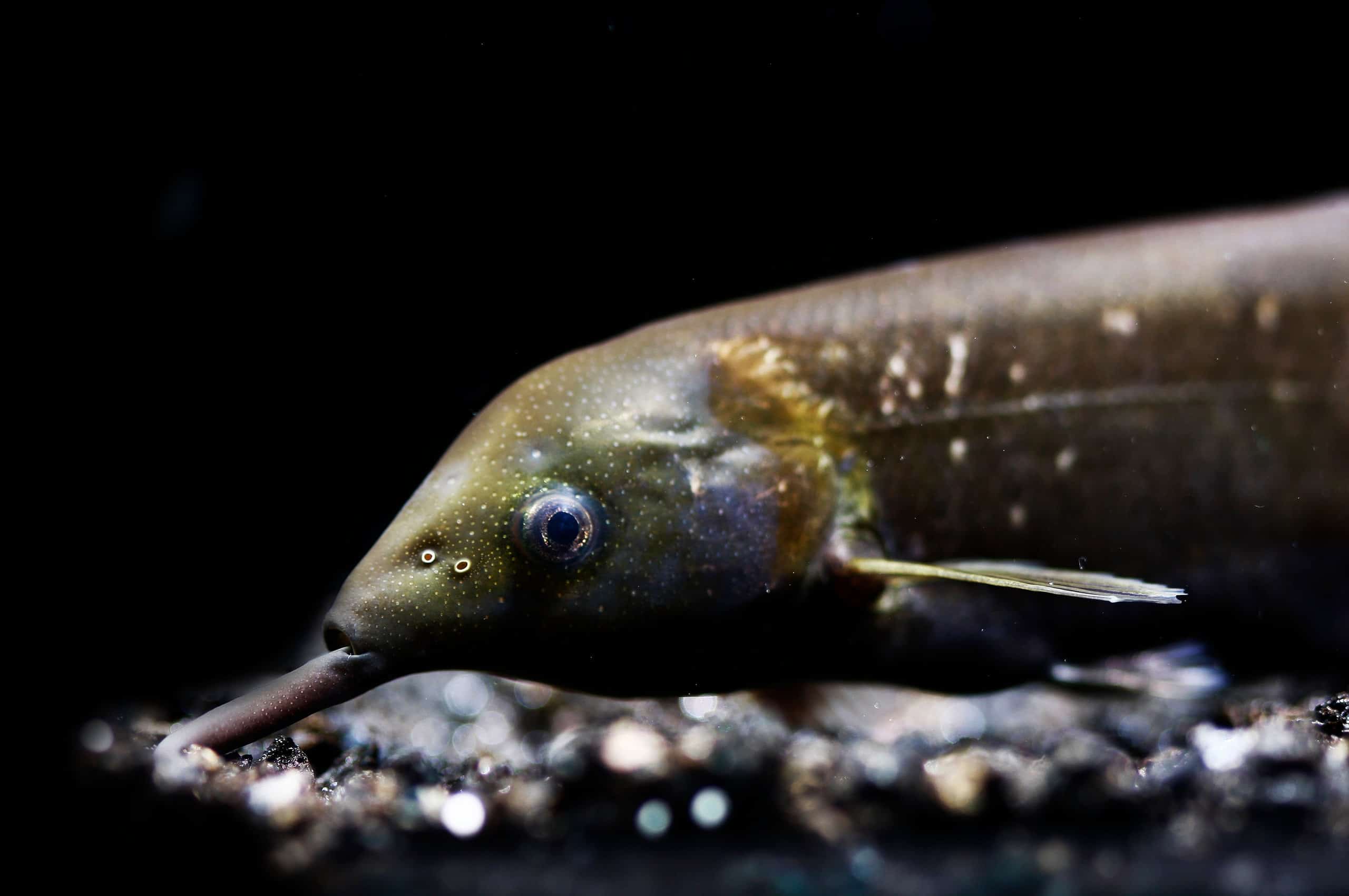
Elephantfish have a a trunk-like protuberance on their heads called the Schnauzenorgan.
©Pavaphon Supanantananont/Shutterstock.com
There are four recognized species in the genus Gnathonemus. These freshwater fish belong to the family Mormyridae, also called the elephantfishes. Elephantfish are weakly electric fish that are endemic to the slow-moving rivers of sub-Saharan Africa. These fish generally reach between 9-14 inches. They are brown to black in color with long, slim bodies and a forked tail fin.
Elephantfish have a trunk-like protuberance on their heads that is an extension of their mouths. This protrusion is called the Schnauzenorgan, which is used for electrolocation and communication. They can sometimes be territorial and aggressive toward other members of their species.
5. Electric Skates (Raja)
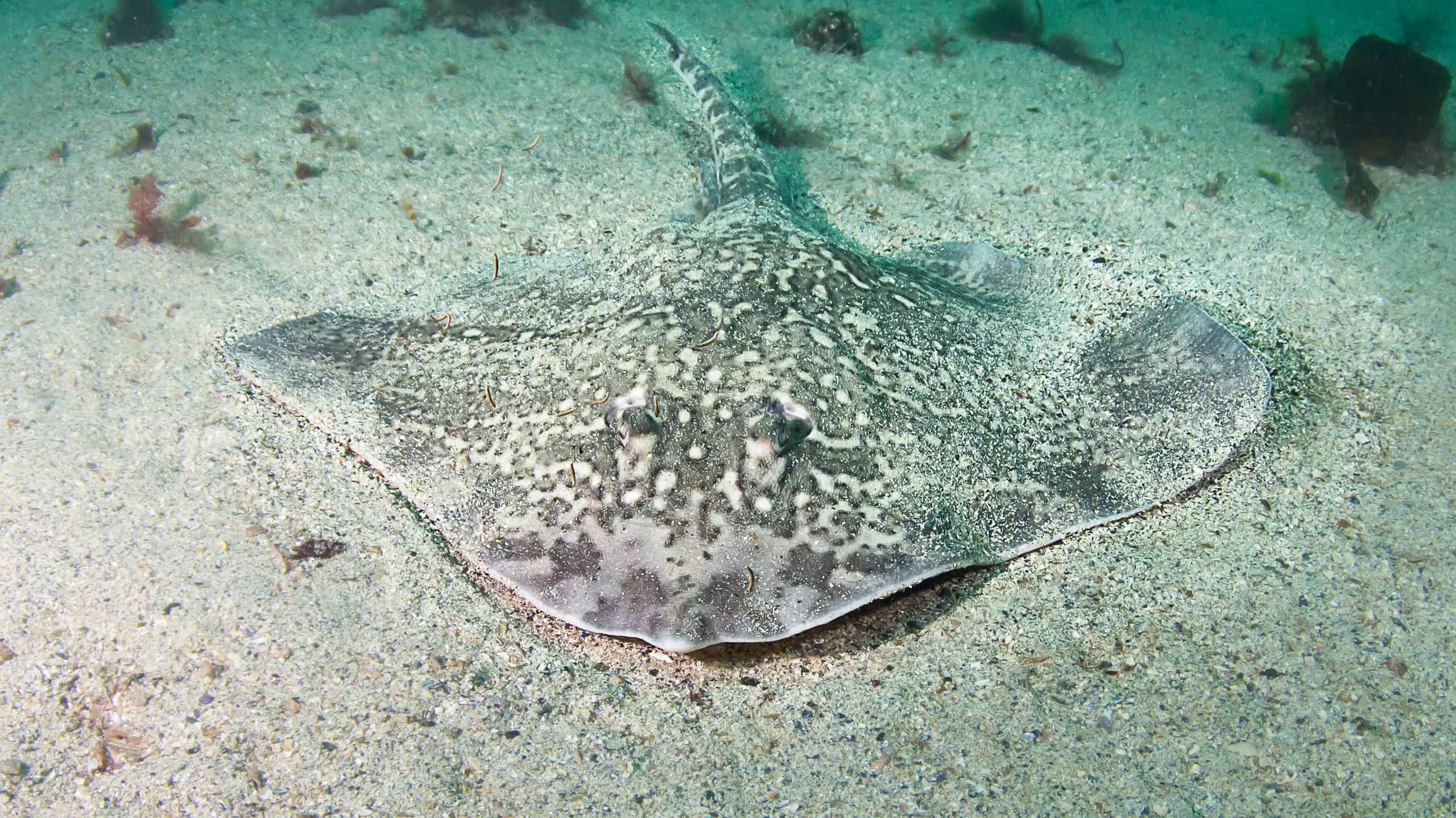
The most likely use for skates’ weak electrical currents is communication.
©Joern_k/Shutterstock.com
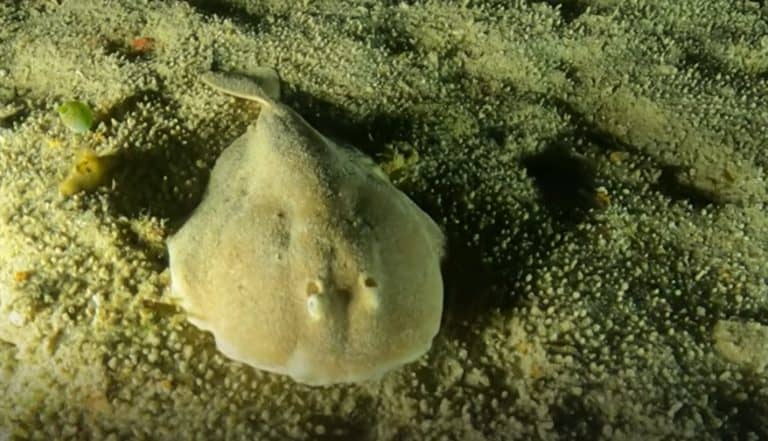
Raja is a genus of electric skates in the family Rajidae. There are currently 16 recognized species in the Raja genus. They can be found in the eastern Atlantic, Mediterranean, and Indian Oceans at depths up to 2,600 feet. These skates have flattened bodies that may be plain colored or patterned. Their large pectoral fins give them a rhombus shape. They also have sharp snouts made of cartilage. Like rays, their mouth and gills are on their underside. They can reach sizes between 1.3–4.6 feet, which varies depending on the species.
These skates are bottom-dwellers and frequently bury themselves in sand to ambush prey. They are believed to be active during the day and night. Electric skates have their electrical organs in their tails. Unlike other weakly electric fish, researchers have found that skates’ EOD is too weak to stun prey or deter predators and too irregular and infrequent for electrolocation. Scientists have concluded the primary usage for their electric currents is most likely communication.
4. Electric Catfish (Malapterurus)
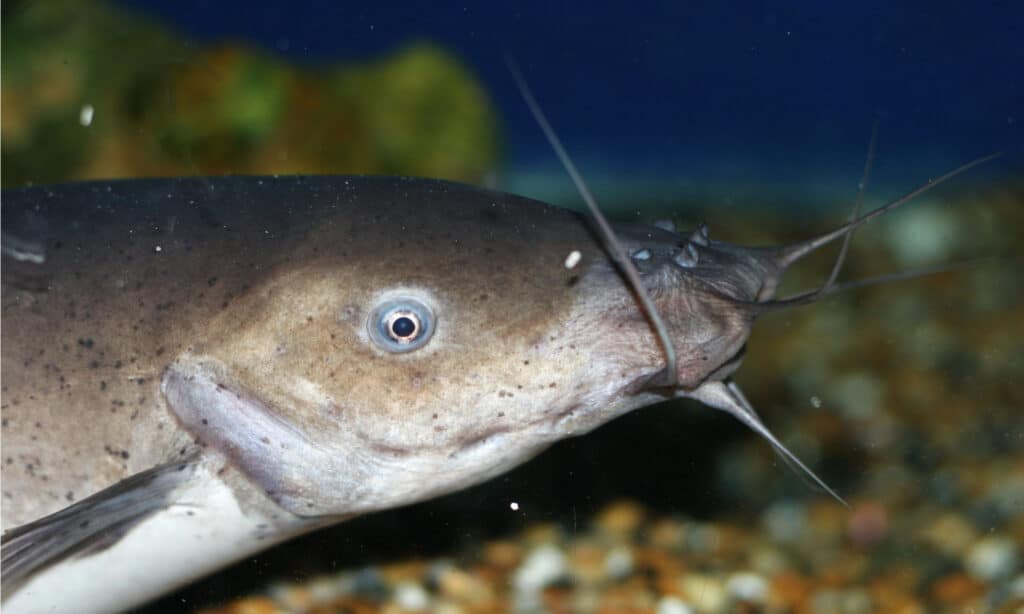
The electric catfish can discharge a shock of up to 450 volts to defend itself and capture prey.
©Pavaphon Supanantananont/Shutterstock.com
The electric catfish is a strongly electric fish native to the freshwater rivers and lakes of Africa, including the Nile River and Lake Chad. In the family Malapteruridae, there are at least 18 recognized species of electric catfish. They resemble regular catfish, with small eyes, barbels (“whiskers”), and long, rounded bodies. These catfish typically reach 48 inches in length and weigh up to 45 pounds.
Electric catfish produce around 350-450 volts. This is used to stun prey, which is usually smaller fish, and defend themselves from predators. They can typically be found close to the bottom of their environment. As nocturnal hunters, they also use their EOD to navigate in low light.
3. Electric Rays (Torpedo)
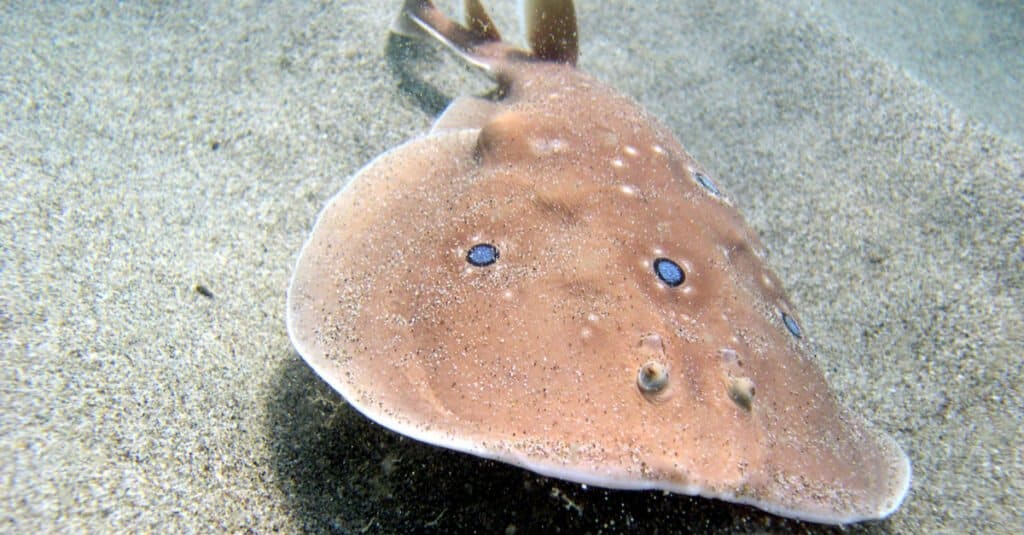
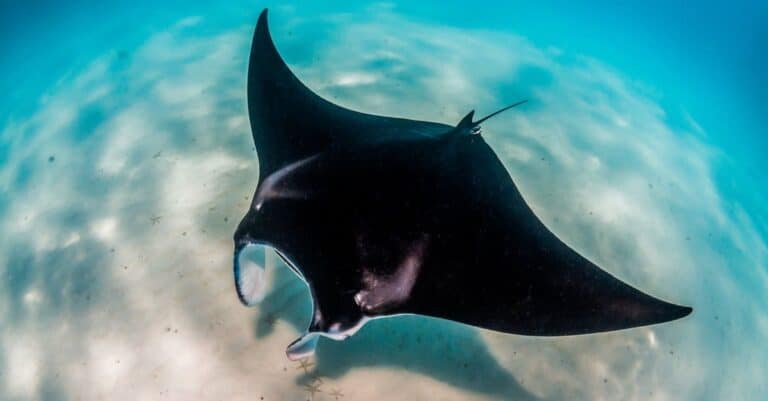
Torpedo is a genus of electric rays in the family Torpedinidae. There are 13 recognized species of electric rays in this genus. They primarily inhabit the Mediterranean Sea and parts of the Eastern Atlantic Ocean at depths up to around 1,475 feet. Their bodies are flat and rounded, with their gill slits and mouths on the underside similarly to skates. Caudal fin size varies with species. Larger species have been recorded to reach around 6 feet long and 200 pounds.
Large torpedo rays like the Atlantic torpedo ray can emit an electric shock of up to 220 volts. However, lesser electric rays can only emit around 37 volts. Electric rays use their EOD to paralyze both predators and bony fish like mackerel and herring. These rays often prefer soft-bottom habitats where they can bury themselves in the sediment to ambush prey.
2. Stargazer (Astroscopus)
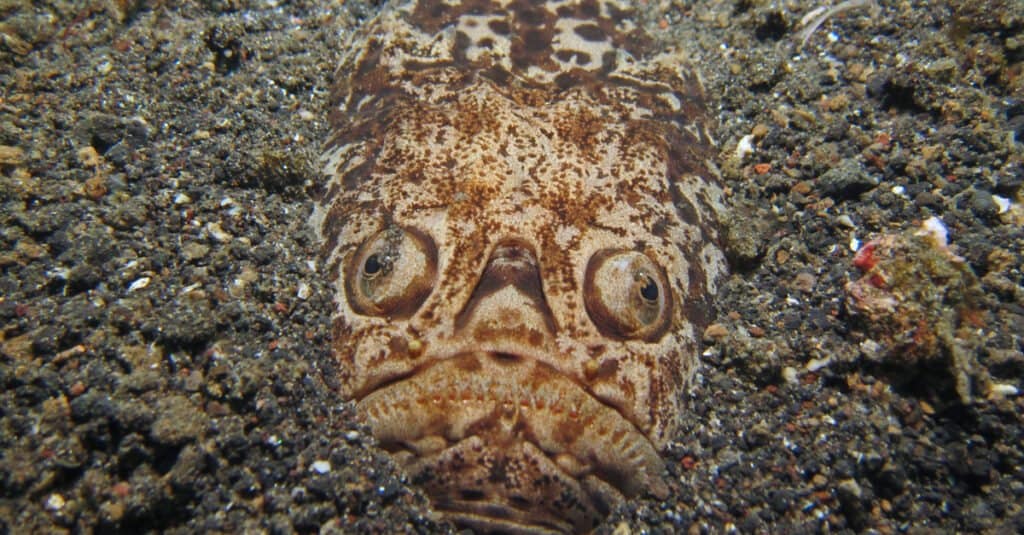
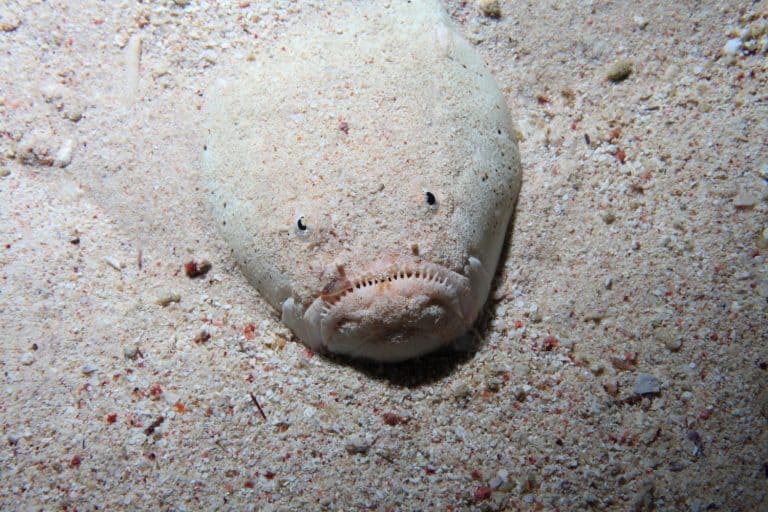
Stargazers bury themselves in sediment to ambush prey at the bottom of the ocean.
©Luke Suen/Shutterstock.com
Astroscopus is a genus of electric stargazers in the family Uranoscopidae. There are four extant species and one extinct species in this genus. Electric stargazers are a brownish color with white speckles. They have large round bodies, big mouths shaped in a frown, tiny eyes on top of their head, and sharp teeth. They are commonly found along both the Atlantic and Pacific Coasts of North America and the northern coast of South America.
Stargazers bury themselves in the sand to ambush passing prey. However, they do not use the electrical organ behind their eyes to stun prey. Their shock is around 50 volts, but it is primarily used for defending against predators. The shock should deter most threats, but they have also been known to bite swimmers and divers that stray too close.
1. Electric Eel (Electrophorus)
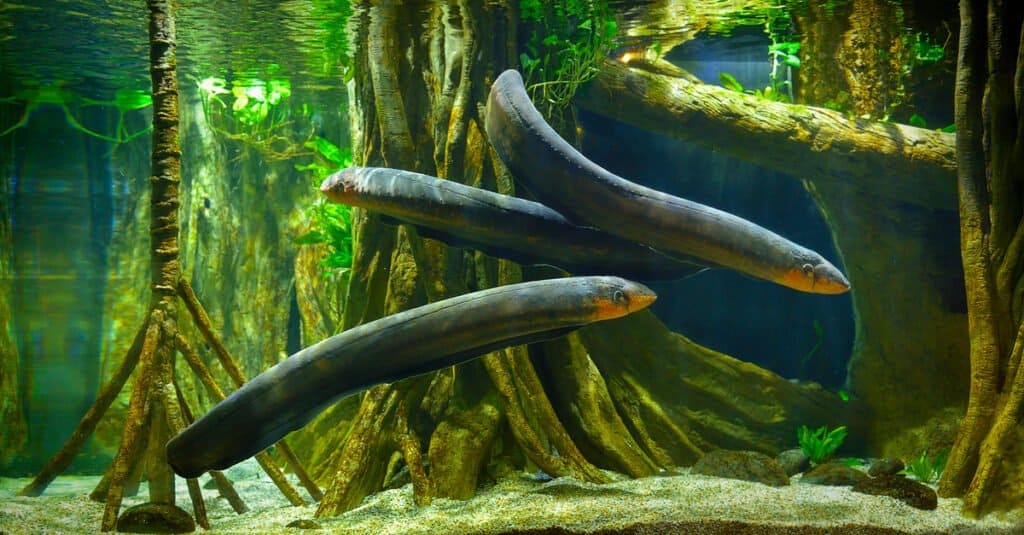
The electric eel is more closely related to knifefish than true eels.
©tristan tan/Shutterstock.com
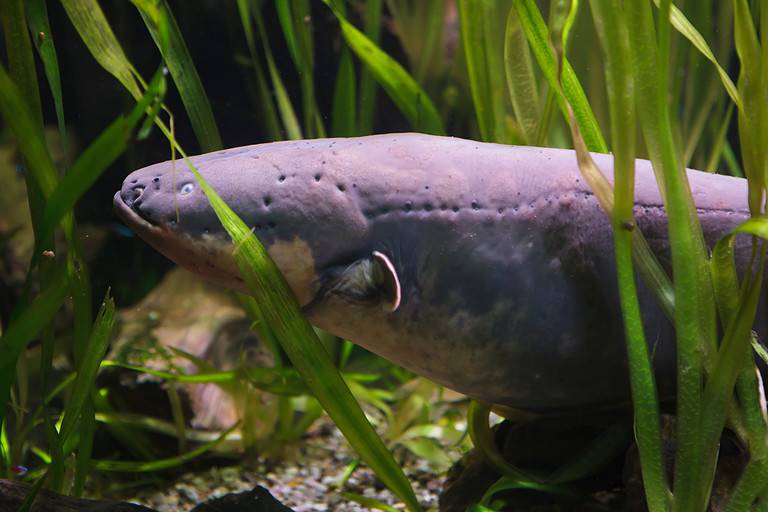
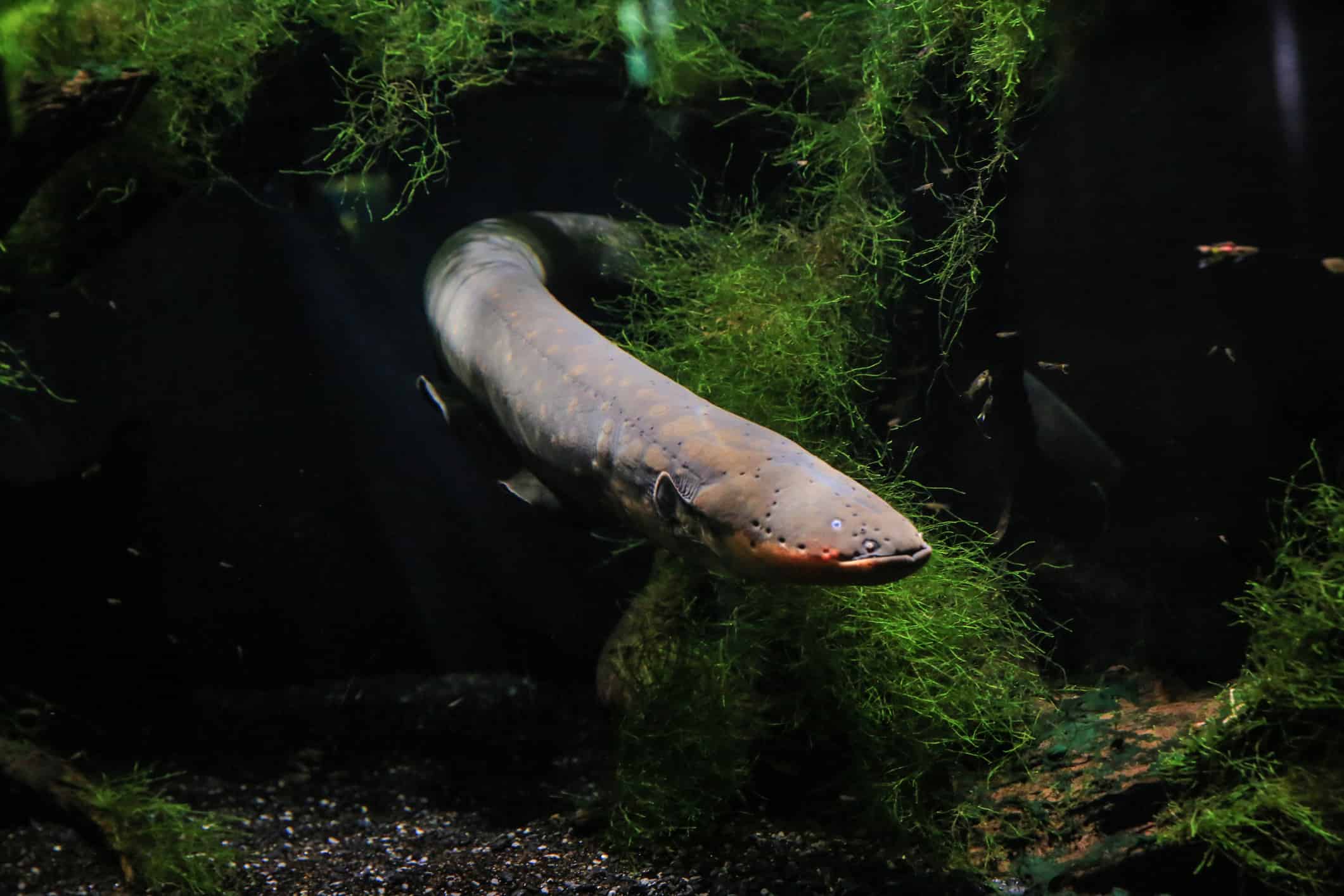
Electric eels are tropical freshwater fish in the genus Electrophorus and the family Gymnotidae, the same family as banded knifefish. They are the only members of the subfamily Electrophorinae. These eels inhabit muddy river bottoms with dense vegetation and plenty of shade. They are found in South America, particularly in the Orinoco River basin and parts of the Amazon.
Unlike other fish, the electric eel gets most of its oxygen by breathing in air from the surface. Electric eels have long, snake-like bodies and a powerful electric organ that develops as they age. When fully grown, they can produce electric shocks from 600-860 volts. They use their EOD to stun prey and defend against predators. The electric eel is considered the most electric animal in the world.